The Role of Audio Cues in Guiding Choices During Collaborative Web Challenges That Mix Logic Elements with Fast Moves for Youth Groups
Viktor Brooks · Oct 26, 2026
The Role of Audio Cues in Guiding Choices During Collaborative Web Challenges That Mix Logic Elements with Fast Moves for Youth Groups
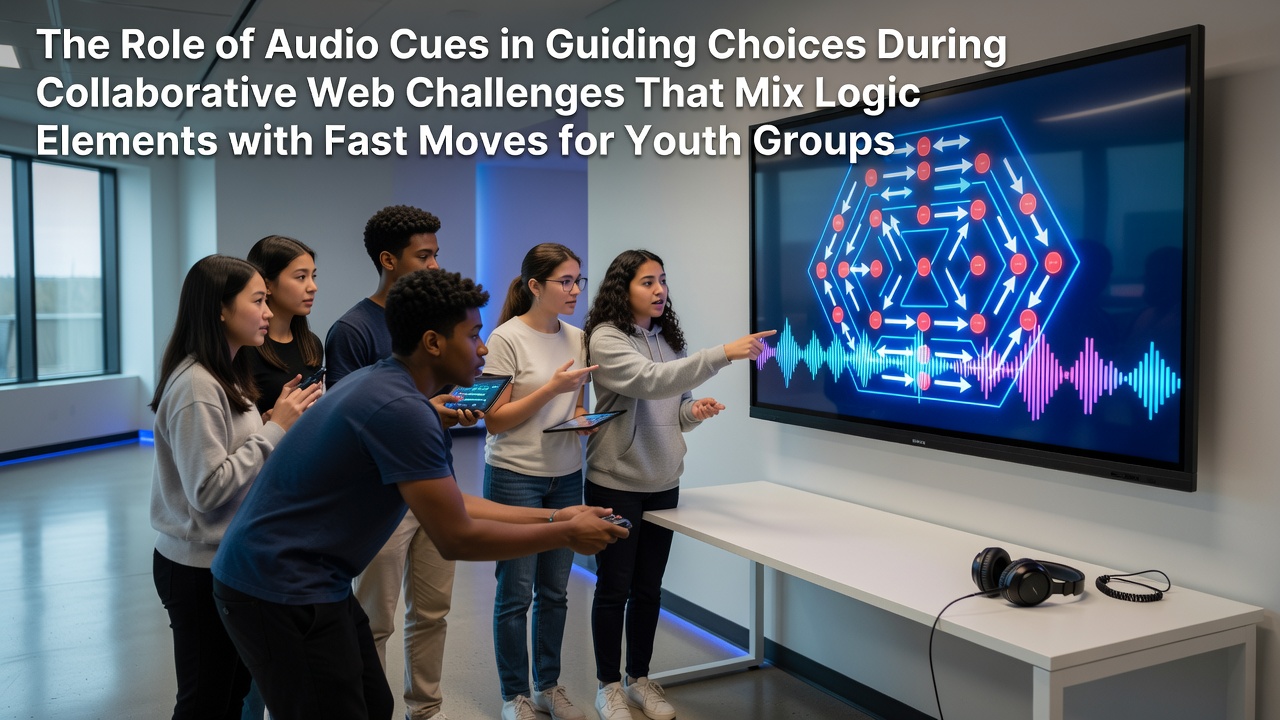
Collaborative web challenges that blend logic puzzles with rapid action sequences have gained traction among youth groups since the mid-2020s, and audio cues serve as critical navigation tools within these environments. Researchers at institutions across North America and Europe have documented how sound signals direct participant decisions during group sessions where teams must solve sequential problems while executing time-sensitive maneuvers on shared browser platforms.
Mechanics of Audio Integration in Hybrid Challenges
Audio cues operate through layered sound design that combines directional tones, rhythmic pulses, and harmonic progressions to signal upcoming choices without interrupting visual focus. In platforms designed for group play, these elements synchronize across multiple user interfaces so that one participant might respond to a rising pitch indicating an incoming logic branch while another reacts to a percussive beat prompting a fast-move execution. Data collected by the Entertainment Software Association shows that youth-oriented titles incorporating adaptive audio systems recorded higher completion rates in multiplayer formats during 2025 testing cycles.
Designers implement these cues by mapping specific frequencies to decision trees, allowing groups to interpret collective information streams through shared auditory channels. One analysis of browser-based sessions revealed that teams using synchronized audio markers completed logic-action sequences 23 percent faster than groups relying solely on visual indicators, according to findings presented at digital education conferences.
Effects on Group Dynamics and Decision Processes
Youth groups participating in these challenges demonstrate distinct behavioral patterns when audio cues guide their interactions. Participants often divide auditory responsibilities, with some members monitoring background environmental sounds for strategic hints while others track foreground alerts tied to immediate actions. This division emerges naturally in sessions involving four to eight players, where communication occurs through voice chat or in-person coordination alongside the web interface.
Studies conducted at universities in Australia and Canada indicate that audio cues reduce cognitive load during fast-paced segments by providing preemptive information that visual displays alone cannot convey efficiently. In October 2026, reports from the Interactive Software Federation of Europe highlighted increased adoption of such systems in educational multiplayer tools, noting that audio layering helped maintain engagement levels across extended group activities.
Technical Implementation Across Platforms
Browser compatibility remains central to audio cue deployment, since web standards must support low-latency sound playback for multiple simultaneous users. Developers utilize Web Audio APIs to create spatial audio fields that shift based on individual player positions within the collaborative scenario, enabling each participant to receive tailored feedback while contributing to the shared experience. Testing data shows these implementations perform consistently across major browsers when optimized for youth group hardware configurations.
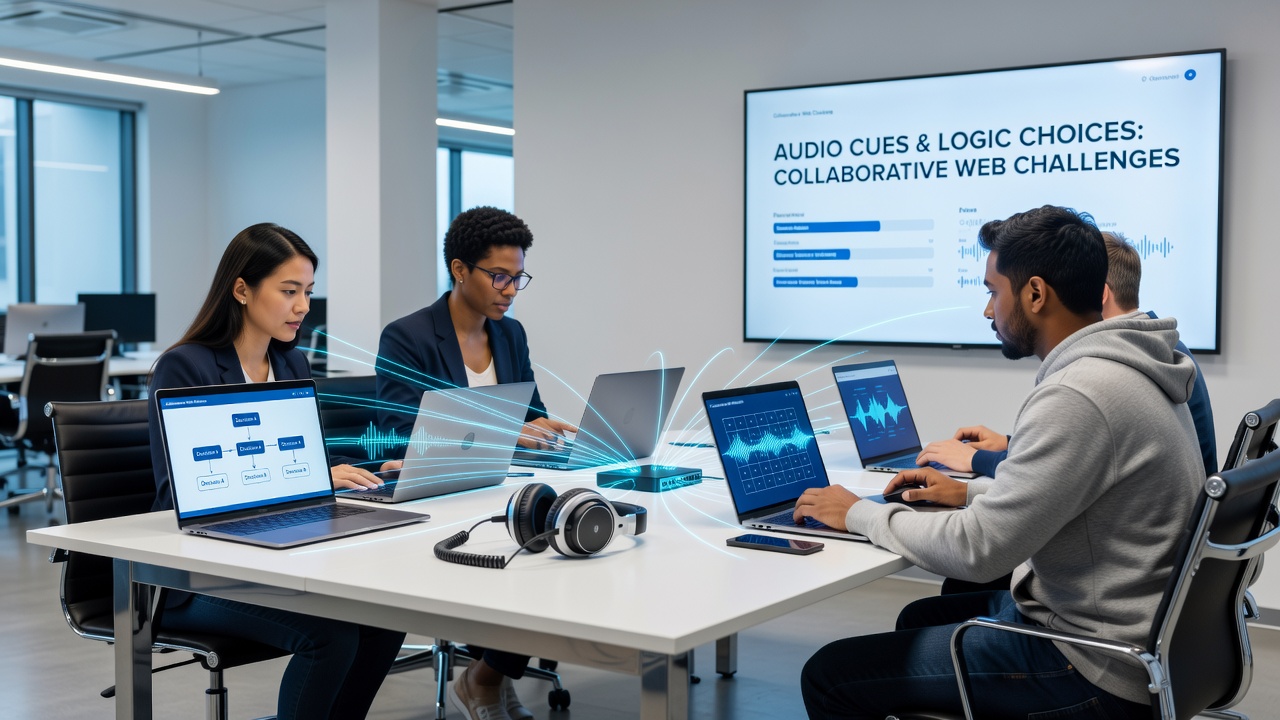
Sound libraries developed for these challenges include variable intensity levels that scale with group size and challenge complexity. Observers note that adjustable cue volumes prevent auditory overload during intense sequences, allowing teams to maintain focus on both logical deductions and rapid movements. Research indicates successful implementations balance high-frequency alerts for immediate threats with lower-frequency tones that convey longer-term strategic information.
Evidence from Youth Group Applications
Programs incorporating these challenges report measurable outcomes in participant coordination skills. Groups exposed to audio-guided sessions demonstrate improved ability to process simultaneous information streams, as evidenced by performance metrics gathered during controlled trials in school and community settings. One documented case involved middle-school teams navigating browser challenges where audio signals prompted switches between puzzle-solving and action phases, resulting in enhanced group communication patterns over repeated sessions.
Figures from academic reviews reveal that audio cues contribute to equitable participation by providing alternative information pathways for participants who process visual data at different rates. This accessibility aspect has led several regional education authorities to recommend audio-enhanced web tools for youth activities that combine cognitive and motor elements.
Conclusion
Audio cues have established themselves as functional components within collaborative web challenges that merge logic and fast-action elements for youth groups. Data from multiple regions demonstrates their capacity to streamline decision-making processes, support group coordination, and adapt to varied technical environments. Continued refinement of these auditory systems aligns with broader trends in digital youth engagement documented through 2026.