How Multiplayer Interactions Reshape Puzzle Design in Downloadable Kids Adventure Titles
Viktor Brooks · Sep 14, 2026
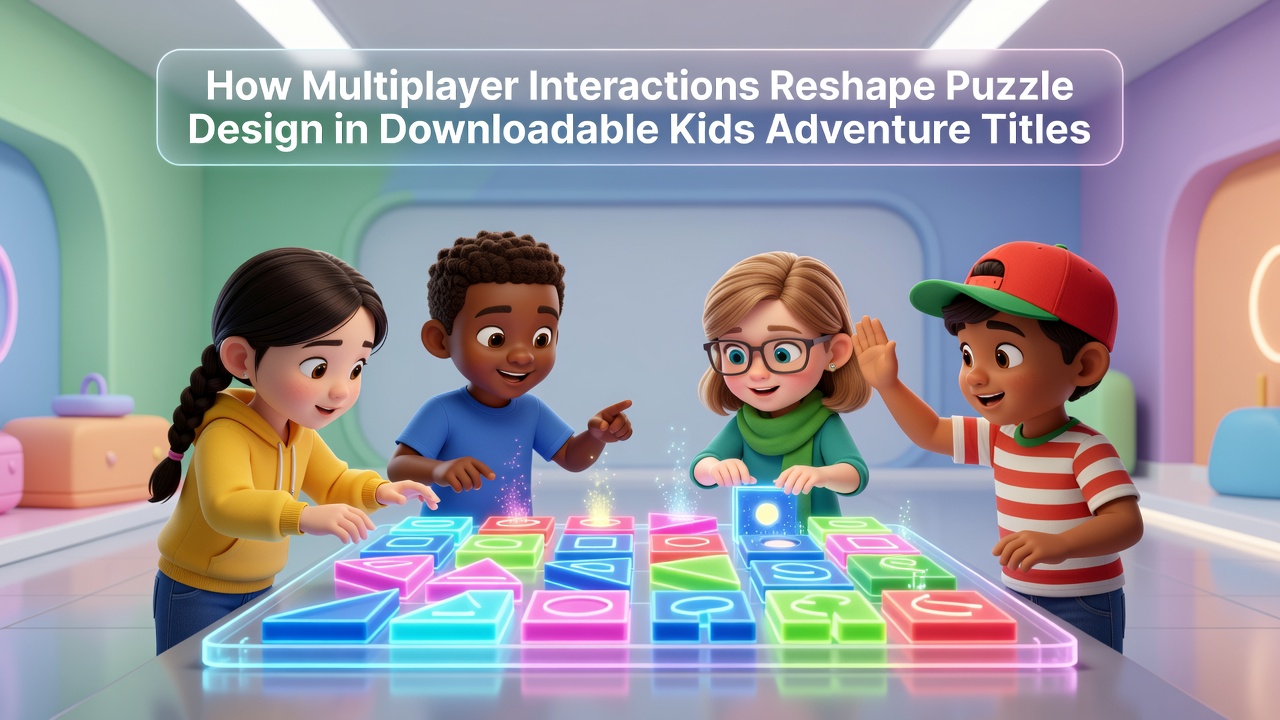
How Multiplayer Interactions Reshape Puzzle Design in Downloadable Kids Adventure Titles
Downloadable kids adventure titles have incorporated multiplayer features that require designers to restructure traditional puzzle mechanics around simultaneous player input and shared objectives. Research from the Entertainment Software Association indicates that titles supporting two to four local or online players now account for over 35 percent of new downloadable releases aimed at ages six to twelve as of mid-2026.
Puzzle sequences in these games frequently split into segments where one player manipulates environmental objects while another observes and communicates changes. Designers adjust difficulty curves by embedding optional cooperative branches that activate only when multiple controllers register activity.
Core Design Shifts in Cooperative Puzzle Structures
Single-player puzzle logic often follows linear cause-and-effect chains, whereas multiplayer versions introduce parallel action requirements. A switch that opens a door in one location may need simultaneous pressure from a second player in another room, forcing level architects to map interdependent trigger zones across shared spaces.
Studies conducted by the International Game Developers Association show that teams allocating 40 percent of development time to multiplayer puzzle prototyping report fewer post-release balance patches. These prototypes test communication patterns such as voice chat latency and screen-sharing constraints within downloadable packages.
Communication and Synchronization Mechanics
Developers integrate visual cues like glowing pathways or synchronized timers that appear only when two or more players remain within proximity. Data from the European Games Developer Federation reveals that games using color-coded signals for partner positioning reduce average puzzle completion time by 22 percent compared with text-only instruction sets.
September 2026 sees several mid-sized studios releasing patches that add spectator modes for younger siblings, allowing observation without direct control while still contributing to group scoring systems.
Level Architecture Adjustments for Group Play
Level designers now place checkpoints at intervals that accommodate staggered player arrivals rather than assuming continuous forward momentum. Rooms contain multiple entry points and redundant pathways so that one participant can backtrack to assist without halting overall progress.
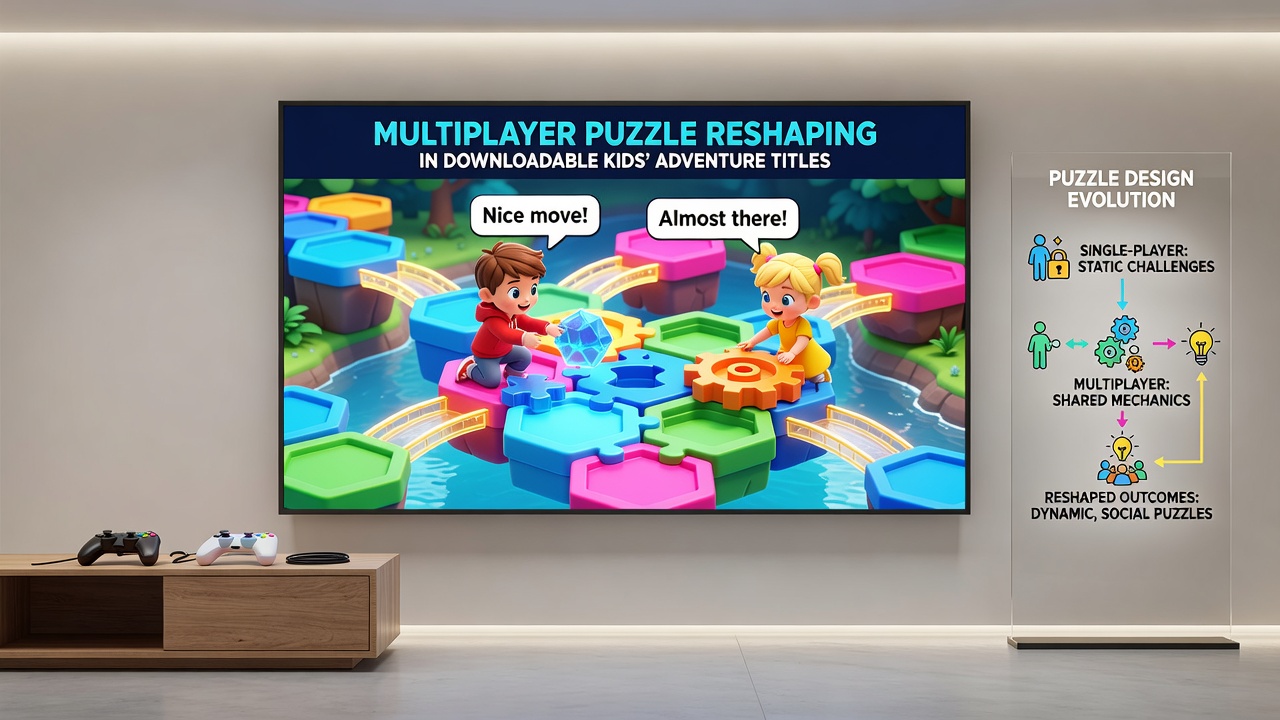
Modular asset libraries allow rapid reconfiguration of puzzle elements based on detected player count at launch. When the game registers three active profiles, additional movable blocks or hidden switches populate automatically to maintain engagement parity.
Data-Driven Iteration Cycles
Telemetry systems track interaction frequency between players during specific puzzle types. According to figures released by Common Sense Media, teams reviewing heat maps of failed cooperative attempts adjust camera angles and prompt timing within two weeks of closed beta feedback.
Downloadable formats facilitate these updates through background patches that do not require full reinstallation, keeping file sizes under 15 gigabytes for most titles targeting school-age audiences.
Conclusion
Multiplayer interactions continue to drive measurable changes in how puzzle sequences are authored, tested, and updated within downloadable kids adventure titles. Industry reports and development metrics document the shift toward interdependent mechanics, synchronized visual language, and adaptive level layouts that respond to real-time player count. These patterns appear consistently across releases scheduled through late 2026.